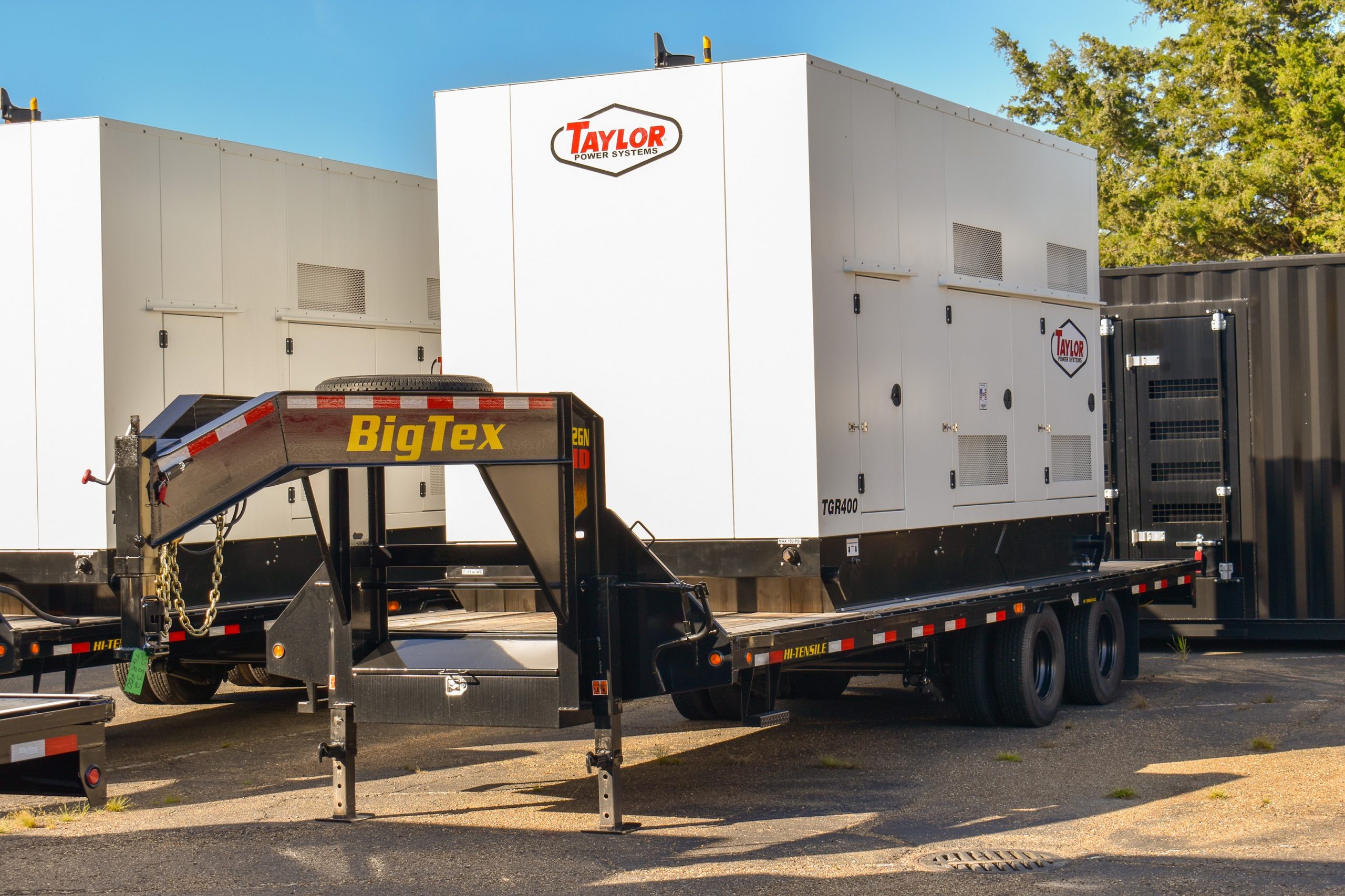
Picking the Right Generator Size Is the Foundation of Reliable Power
You’re planning a new well site in the Permian. You know you need power—but how much power? Too small and your rig shuts down mid-well. Too large and you’re leasing capacity you’ll never use, wasting money every month. This is one of the most common decisions operators get wrong, and it happens because the math isn’t intuitive.
Sizing a generator for a drilling operation isn’t a guess. It’s a calculation. And if you get it wrong at the start, it costs you money, downtime, or both.
This guide walks you through the three-step process we use at WGL Power to right-size a generator for your specific site.
Step 1: Calculate Your Total Connected Load
The first mistake operators make: they add up nameplate ratings for everything on site and call that the generator size. That’s how you end up oversized and overpaying.
Start with an equipment list. A typical drilling operation needs power for:
- Prime movers: Draw works (50–200 kW typically)
- Rotary systems: Top drive or rotary table (30–100 kW)
- Mud systems: Mud pumps, shakers, centrifuges (20–80 kW)
- Lighting: Rig lights, compound lights (5–15 kW)
- Compressors: Air compressors, pneumatic tools (5–20 kW)
- Support: Trailers, equipment, HVAC in support buildings (10–30 kW)
- Contingency or future expansion (10–20% buffer)
Add these up honestly. Don’t inflate. Don’t guess. If you have a site power study—use it. If you’re planning an expansion, ask the rig contractor for actual load data.
Example: A mid-size land rig might total 280–320 kW of connected load. That’s nameplate. Not everything runs at nameplate simultaneously.
Step 2: Apply Demand Factors—The Key to Right-Sizing
This is where most operators go wrong. They think: “I have 300 kW of equipment, so I need a 300 kW generator.”
In reality, not everything draws full power at the same time. Generator sizing codes and industry practice recognize this with a concept called the demand factor—a percentage of connected load that actually runs simultaneously.
For a drilling operation:
- Continuous load (always on): Compressors, trailers, support buildings, lighting = roughly 40–60% of total connected load
- Intermittent high load (sporadic peaks): Draw works during drilling stands, mud pump cycling = another 30–50% that runs intermittently
- Peak simultaneous load (worst case): Both continuous and intermittent at the same time = roughly 70–85% of nameplate capacity in real operation
Using this approach, that 300 kW of connected equipment typically demands 220–250 kW under peak simultaneous conditions.
A 400 kW generator covers 300 kW of connected load with comfortable margin and avoids oversizing.
Step 3: Build in Margin, Not Excess
After demand factoring, add a margin for:
- Soft starters and inrush: Motors draw 3–6x their rated current during startup. A soft-start device reduces this, but margin still matters.
- Harmonic loads: Modern drilling equipment with VFDs (variable frequency drives) draws non-linear currents. Budget 10–15% extra capacity for this.
- Future expansion: If the operator plans to add mud cooling or additional lighting later, a 10% margin makes sense. A 50% margin does not.
- Fuel fluctuation: Natural gas BTU content varies seasonally and by region. A 5–10% margin compensates.
Total reasonable margin: 10–20% above your demand-factored peak load.
Real-World Example: Why a 400kW Works for Most Midland-Area Drilling Sites
Let’s walk through an actual scenario. A drilling contractor moves a rig into the Permian. Site specs:
- 30-ton drawworks (90 kW)
- 1,000 HP top drive (700+ kW nameplate… but modern top drives run 60–80 kW average during drilling)
- Mud pumps and gas separator (50 kW continuous)
- Rig lighting and support systems (25 kW)
- Contractor trailers and HVAC (30 kW)
- Total nameplate: ~900 kW (if everything ran flat-out)
- Realistic simultaneous load: 250–280 kW during drilling operations
This site runs comfortably on a 400 kW generator with room to spare. It doesn’t run out of power. The generator doesn’t cycle or struggle under load. Monthly lease cost is controlled. Uptime is predictable.
The Penalty for Getting It Wrong
Undersizing: A 250 kW generator on this same site would hit 95%+ load during drilling, cycling frequently, aging the engine faster, and creating risk of nuisance shutdowns when load spikes briefly. Downtime costs $5,000–$20,000 per hour in a drilling operation.
Oversizing: A 600 kW generator on the same site is idle 60–70% of the time, costing $150–$300/month in unnecessary lease fees. Over a 6-month well, that’s $1,000–$1,800 you didn’t need to spend. And an idle generator degrades faster (more oil sludge, carbon buildup, less load conditioning).
Getting it right costs nothing extra. It protects uptime and keeps costs predictable.
How We Help You Get It Right
At WGL Power, we size your generator by talking to you—about your equipment, your plans, and your site constraints. We don’t hand you a standard quote for “a 400 kW unit.” We calculate.
If you’re uncertain about your load, we can help:
- Work with your rig contractor or site manager to gather actual equipment specs
- Review any existing site power studies
- Run a load calculation specific to your operation
- Recommend the right capacity, the right fuel type (natural gas vs. diesel), and the right service package
Once the generator is on site, our remote monitoring watches your real load in real time. If you’re consistently running 80% capacity, we see it. We can advise on expansion, optimization, or fuel switching—before it becomes a problem.
The Bottom Line
Sizing a generator isn’t complicated, but it does matter. Start with actual equipment specs, not guesses. Apply realistic demand factors. Build in reasonable margin. And when you lease, pick a partner who sizes by calculation, not catalog.
The right-sized generator is the generator that gives you capacity when you need it, doesn’t bleed money on excess capability you don’t need, and keeps your well turning.
If you want to walk through the load calculation for your next site, reach out. Contact Sales@wglpower.com or call 432-316-6961. We’re in Midland.